
8 Ways to Improve Patient Satisfaction Scores Fast
Patient satisfaction is more than just a "nice-to-have" – it’s directly tied to better health outcomes, higher retention rates, and even financial performance. If you’re looking to improve patient satisfaction quickly, here are eight actionable strategies:
- Medical Practice Management Software: Simplify appointment scheduling with 24/7 online access, automated reminders, and digital intake forms.
- Patient Portals: Enable patients to handle tasks like scheduling, prescription renewals, and bill payments anytime, improving convenience and engagement.
- Secure Messaging & Automated Reminders: Use text-based communication to reduce delays, improve responsiveness, and make follow-ups easier.
- EMR/EHR Systems: Personalize care by documenting patient preferences and providing easy access to medical records.
- Practice Analytics & Scheduling Tools: Identify bottlenecks, optimize workflows, and improve staff responsiveness.
- Online Scheduling & Digital Check-In: Cut wait times, reduce paperwork, and keep patients informed about delays.
- Telemedicine: Offer virtual visits for follow-ups, saving patients time and increasing accessibility.
- Medical Billing Services: Provide clear, upfront cost estimates and flexible payment options to reduce billing frustrations.
These steps address common pain points like long wait times, communication gaps, and billing confusion. By focusing on these areas, you’ll not only improve patient satisfaction scores but also strengthen trust and loyalty.
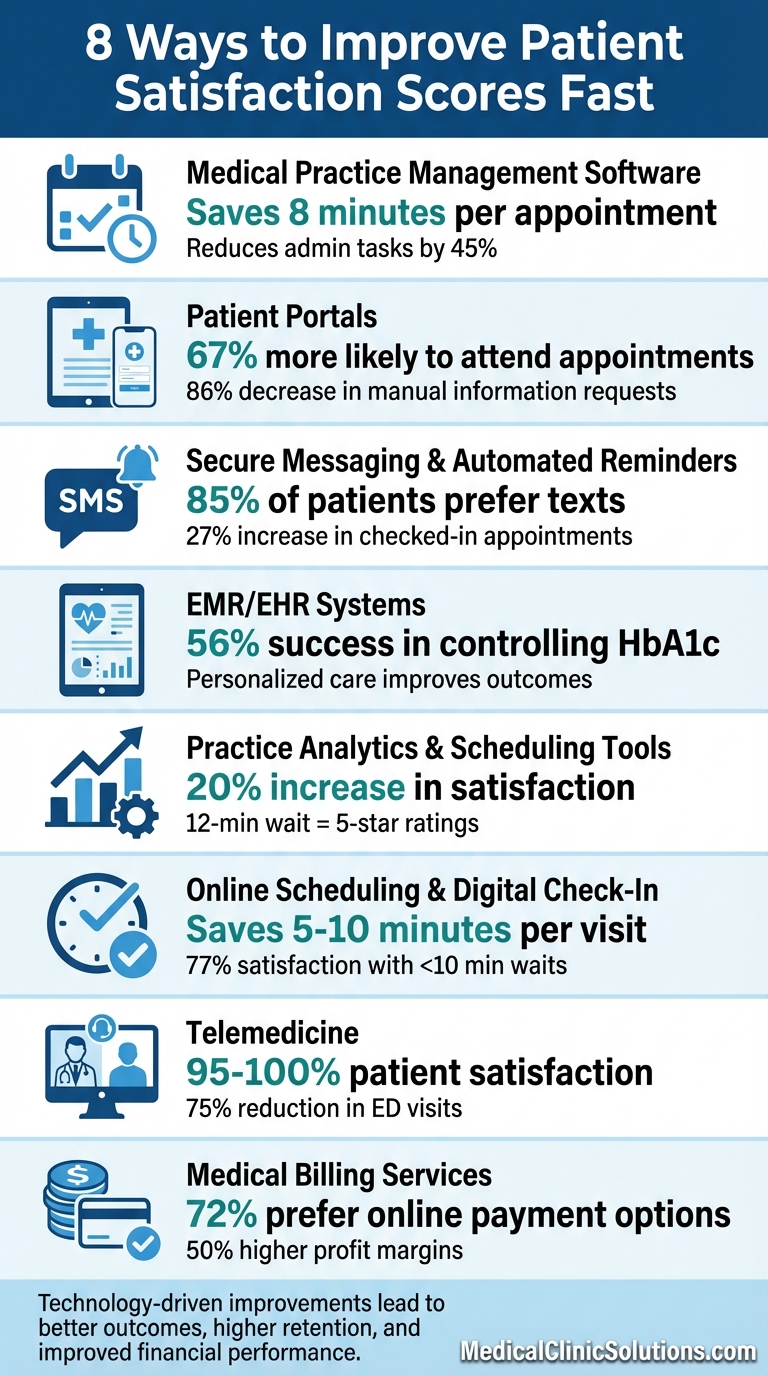
8 Proven Strategies to Improve Patient Satisfaction Scores
How to Improve Patient Satisfaction and Still Deliver Quality Care
1. Use Medical Practice Management Software to Improve Appointment Scheduling
Relying on manual appointment scheduling – where calls can take over 8 minutes and often involve long hold times and callbacks – can frustrate patients and waste valuable staff time.
Medical practice management software simplifies this process by offering 24/7 access to provider availability and booking from any device. This not only saves staff time but also improves efficiency. For example, automated scheduling can save around 8 minutes per appointment and reduce administrative tasks by up to 45%.

Features like automated SMS and email reminders help reduce no-show rates, while digital intake forms allow patients to submit their medical history and insurance details ahead of time. For practices with multiple locations, the software provides a unified view of all calendars, making it easier for staff to coordinate appointments and find alternative slots if a preferred location is fully booked. These enhancements lead to shorter wait times and higher patient satisfaction.
"Patients like the ability to request to reschedule, request to cancel or quickly text back and forth with the front desk…We’re much more likely to get patients to respond, schedule appointments and get things done quickly when it’s just a text message to send back." – Amy Burton, Administrative Manager, Pinnacle Family Medicine
Streamlined scheduling has a direct impact on patient satisfaction. Research shows that doctors with five-star ratings have an average wait time of just 12 minutes, compared to over 33 minutes for those with one-star ratings. Additionally, queue management tools that enhance patient flow can increase satisfaction by up to 20%. Another advantage? About 26% of appointments scheduled online are for the same or next day, helping practices fill last-minute openings. Automated scheduling also allows patients to secure care up to 30 days sooner.
2. Set Up Patient Portals for Easy Self-Service Access
Patient portals give patients the ability to handle administrative tasks anytime, anywhere. Paul Brient, Chief Product Officer at athenahealth, highlights how these portals eliminate the need for patients to call during office hours to schedule appointments, renew prescriptions, or pay bills. Instead, they can manage these tasks from their devices at their convenience. This self-service model not only makes life easier for patients but also lays the groundwork for better patient engagement.
Effectiveness in Improving Patient Experience
Patient portals do more than just save time – they empower patients to play an active role in their healthcare. For instance, by granting easy access to electronic medical records, these tools encourage patients to stay informed about their health. Studies show that diabetes patients using portals have a 56% success rate in controlling HbA1c levels, compared to 32% for non-users. Additionally, portal users are 67% more likely to attend their scheduled appointments. This proactive approach not only simplifies administrative tasks but also supports better management of chronic health conditions.
"A properly implemented patient portal adds breadth and depth to the relationship between the patient and provider."
- Jerold Greer, CIO, Daymark Recovery Services
By enabling patients to take control of their healthcare, portals enhance the overall experience, much like advanced scheduling systems.
Impact on Patient Satisfaction Scores
Patient portals contribute to higher satisfaction scores, which are crucial for hospital reimbursement. Metrics like "Communication about Medicines" and "Discharge Information" often see improvement thanks to these tools. One healthcare facility reported an 86% decrease in manual information requests from patients who used the portal during its first year. Secure messaging within portals also reduces call volumes while giving patients a stress-free way to address concerns between visits [25, 27]. These tools mirror the efficiency gains seen with other technologies like advanced scheduling systems.
Ease of Integration with Existing Systems
Today’s patient portals are designed to integrate smoothly with EHR and practice management systems through APIs. This integration helps avoid issues like double-booked appointments and ensures providers can respond to patient messages without disrupting their existing workflows. While some systems can be implemented in just a few weeks, most providers need 3 to 12 months to fully integrate a portal with their EHR systems. To encourage adoption, consider auto-enrolling new patients and offering support through text, video tutorials, or in-person sessions for those who need guidance [25, 27]. When fully integrated, patient portals become a seamless part of healthcare operations, reinforcing their role in enhancing patient satisfaction.
3. Improve Communication with Secure Messaging and Automated Reminders
Clear and efficient communication plays a vital role in creating a positive patient experience. When paired with streamlined scheduling and user-friendly patient portals, secure messaging and automated reminders can significantly enhance satisfaction.
Patients today overwhelmingly favor mobile communication. In fact, 85% of smartphone users prefer text messages over emails or phone calls. Texts are not only convenient but also prompt – most people read and respond to them within 2 minutes. This immediacy reduces wait times and increases engagement. For example, 44% of patients report frustration after waiting just 5–15 minutes on hold, making secure messaging a game-changer in reducing delays.
Effectiveness in Improving Patient Experience
Secure messaging and automated reminders help remove obstacles that often discourage patients from seeking care. Administrative hurdles impact nearly 25% of insured patients, causing them to delay or avoid medical visits. Additionally, 66% of patients feel their providers seem rushed. Two-way texting offers a quick solution for rescheduling appointments or addressing concerns, saving time for both patients and staff. Automated follow-ups sent 24–48 hours post-appointment ensure patients adhere to treatment plans and allow providers to catch potential issues early. These tools not only simplify communication but also improve operational efficiency.
"Health care shouldn’t feel like a second job."
- Michael Anne Kyle, R.N., MPH, Ph.D., University of Pennsylvania
Proactive communication can also help manage expectations. For instance, sending a text to inform patients of a 20-minute delay can ease frustration by keeping them in the loop. Similarly, automated payment reminders streamline billing processes.
Impact on Patient Satisfaction Scores
The impact of these tools on patient satisfaction is undeniable. One pediatric practice saw a 27% increase in checked-in appointments and a 78% jump in telehealth visits within just six weeks of adopting engagement tools. In another case, proactive chatbot outreach led to a 27% rise in well-child visits and preventive screenings. These improvements translate directly into higher satisfaction scores, particularly in areas related to communication and responsiveness.
However, it’s essential to ensure these tools are used effectively. Research shows that discussing secure messages during in-person visits can negatively affect satisfaction when patients face health literacy challenges. Keeping messages clear and accessible is key to avoiding misunderstandings.
Ease of Integration with Existing Systems
Modern secure messaging platforms are designed to integrate effortlessly with Electronic Health Records (EHR). This integration allows for quick documentation and faster response times. Automated reminders can be programmed directly into the EHR to manage follow-ups for medication changes or post-procedure care. To ensure a smooth rollout, start with a pilot program, gather feedback from staff, and provide thorough training on HIPAA-compliant usage. Additionally, obtaining written patient consent before sending text messages is crucial.
4. Use EMR/EHR Systems to Personalize Patient Care
EMR/EHR systems aren’t just about storing medical data – they’re tools that bring a personal touch to patient care. They allow providers to document details like preferred names, pronouns, family milestones, or even hobbies. Imagine reviewing a patient’s chart before an appointment and asking, "How was your daughter’s graduation?" That small gesture can make patients feel genuinely seen and appreciated.
Effectiveness in Improving Patient Experience
When EHRs are integrated effectively, they become a single, reliable source of truth for the entire care team. This ensures everyone has access to the most up-to-date information, reducing medical errors, eliminating unnecessary repeat tests, and ensuring smooth continuity of care. Patient portals further enhance this by giving patients 24/7 access to their records, test results, and educational materials, encouraging proactive involvement in their health. Automated features, like sending birthday messages or tailored reminders, add a personal touch without increasing the workload for staff. Even operational aspects, like digital check-ins, streamline the patient experience by cutting down on paperwork and wait times. Together, these features significantly elevate patient satisfaction.
Impact on Patient Satisfaction Scores
The personalized care enabled by EHRs doesn’t just improve operations – it directly impacts patient satisfaction scores. Higher satisfaction rates often lead to better clinical outcomes and greater adherence to treatment plans. These scores also play a crucial role in healthcare reimbursements, as many systems tie payments to results from HCAHPS surveys.
As Alvin Amoroso from Curogram puts it:
"A focus on improving patient satisfaction is not merely about receiving positive reviews; it’s a strategic imperative with tangible benefits that reverberate throughout your entire organization."
Features like automated follow-ups within 24–48 hours of a visit can confirm patients are adhering to their treatment plans and offer a chance to address any concerns. Additionally, using the "teach-back" method – where patients explain their care plan back to the provider – ensures they fully understand their discharge instructions. Financial barriers can also be minimized with EHR-integrated revenue cycle management tools, especially since 85% of patients prefer to pay healthcare bills electronically. These efforts combine to create a smoother, more satisfying care experience.
Ease of Integration with Existing Systems
Modern EHR systems are designed to fit seamlessly into current workflows, using HL7 FHIR standards to sync with external tools and reduce redundant data entry. Rolling out new EHR features can be made smoother by starting with a pilot program in one specialty or location, allowing for adjustments based on real-world feedback. Training clinicians to review personal notes before appointments and standardizing handoffs with methods like SBAR ensures that new systems integrate smoothly into daily routines. This approach not only simplifies the transition but also helps maintain the high-quality care patients expect.
5. Increase Staff Responsiveness with Practice Analytics and Scheduling Tools
Staff responsiveness plays a huge role in shaping how patients view their care. When your team can anticipate needs, minimize delays, and communicate effectively, patient satisfaction often improves. Practice analytics and scheduling tools provide the insights and workflows needed to consistently achieve this level of service.
Effectiveness in Improving Patient Experience
Analytics help identify bottlenecks in areas like check-in, exam room transitions, and checkout. By addressing these specific pain points, you can reduce frustrations that negatively impact patient perceptions. Research supports this: improving patient flow can lead to a 20% increase in satisfaction scores. The numbers tell the story – physicians with five-star ratings have an average wait time of 12 minutes, while those with one-star ratings often exceed 33 minutes.
Integrated scheduling tools also play a key role. They streamline appointments by balancing walk-ins with scheduled visits, which helps eliminate downtime and increases staff efficiency. Custom templates allow you to allocate the right amount of time for various visit types, such as new patient consultations or follow-ups. This prevents overbooking, reducing stress for both staff and patients. Real-time SMS feedback is another game-changer, enabling teams to address service issues on the spot – often before the patient even leaves the office. These tools not only solve immediate problems but also provide actionable insights to further enhance patient care.
Speed of Implementation
Modern analytics and scheduling platforms are built for seamless integration, using protocols like HL7v2 and FHIR to connect with hundreds of scheduling and EMR systems in real time. Automated self-scheduling features also lighten the administrative load, allowing staff to focus more on patient interactions rather than paperwork.
Starting with a pilot program is an effective way to implement these tools. For example, Cleveland Clinic piloted a communication initiative in its emergency department, teaching staff to update patients during wait times. The results were striking:
"As result of our discoveries, we piloted an initiative where everybody in the emergency department was taught to communicate with each patient during their wait… Patient experience scores suddenly went up." – Researcher, Cleveland Clinic
This phased approach ensures smoother adoption and provides valuable feedback before rolling out changes across the entire practice.
Impact on Patient Satisfaction Scores
Better staff responsiveness directly improves patient satisfaction. Queue management software that notifies patients of delays helps manage expectations and reduces frustration. This is especially important considering that 66% of patients feel healthcare providers seem more rushed than they used to be. Predictive analytics further enhance care by helping staff anticipate patient needs and address potential issues before they escalate – critical when nearly half of patients (49%) report not always feeling heard by their providers.
Digital check-in tools also streamline front-desk operations, freeing up staff to personally welcome patients instead of being tied up with paperwork. These combined efforts lead to a smoother, more personalized experience, ultimately boosting patient satisfaction and loyalty.
6. Cut Wait Times with Online Scheduling and Digital Check-In
Effectiveness in Improving Patient Experience
The numbers tell a clear story: patients often wait over 20 minutes in-office and up to 41 minutes from registration to seeing a provider. These delays aren’t just inconvenient – they drive 30% of patients to leave before being seen, while another 30% may switch providers entirely.
Online scheduling and digital check-in systems can drastically cut these wait times. By handling paperwork, insurance verification, and consent forms before the visit, these tools reduce the "door-to-room" time significantly. On average, digital check-in alone saves 5–10 minutes per visit. And the impact on patient satisfaction is huge: 77% of patients who wait less than 10 minutes give top satisfaction scores, compared to just 53% when waits stretch to an hour. For context, five-star hospitals average 13-minute wait times, while one-star facilities exceed 34 minutes.
But it’s not just about cutting down the clock. Transparency matters too. Research shows 83% of patients feel less frustrated if they’re informed about wait times. Digital systems can provide real-time updates and even send text alerts when delays occur, making the experience more bearable – even when things don’t go perfectly.

Speed of Implementation
The good news? Implementing these systems doesn’t have to be overwhelming. Modern scheduling tools sync seamlessly with platforms like Google or Outlook calendars and integrate directly with Electronic Health Records (EHR), keeping data consistent and accessible. Real-time syncing ensures minimal disruption to your current workflows.
To get started, track wait times across different stages of the patient journey for two to four weeks. Then, tackle one issue at a time – like introducing digital intake forms patients can complete at home. From there, you can add features like mobile "I’m here" notifications or kiosks that instantly alert staff when a patient arrives. Automated reminders via SMS or email can also help reduce no-shows while streamlining pre-visit processes.
Impact on Patient Satisfaction Scores
Patients are increasingly leaning toward providers who offer digital conveniences. In fact, 80% prefer doctors with online scheduling options, and 67% would rather book appointments online than over the phone. This shift mirrors broader consumer expectations, where booking a doctor’s visit should feel as easy as ordering groceries or reserving a flight. Reducing wait times through these tools directly boosts patient satisfaction scores.
Additionally, automating check-ins and intake forms frees up front-desk staff to focus on welcoming patients and addressing their needs in person. This is critical when 60% of patients hang up if left on hold for more than a minute. Digital intake also allows patients to verify their medical history and insurance details themselves, reducing errors and improving data accuracy.
Ease of Integration with Existing Systems
The beauty of these tools lies in their ability to enhance workflows without disrupting them. Online scheduling systems can be configured to prevent scheduling mishaps, like booking lengthy procedures into short time slots. Adding small buffer periods – 5 to 10 minutes – between appointments can help prevent delays from snowballing throughout the day. Real-time dashboards provide a bird’s-eye view of patient flow and room availability, making it easier to address bottlenecks as they arise.
Tailoring schedules to match appointment complexity is another game-changer. For instance, a new patient consultation will naturally require more time than a routine follow-up, and your scheduling system should reflect that. As Reservio puts it:
"In healthcare, scheduling is more than just a calendar task; it’s the foundation of how your clinic functions. Done right, it minimizes wait times, keeps your team calm under pressure, and ensures every patient gets the care and attention they deserve." – Reservio
7. Add Telemedicine Software for Easier Follow-Up Visits
Effectiveness in Improving Patient Experience
Telemedicine takes the hassle out of routine check-ins by letting patients attend follow-up appointments from the comfort of their own homes or workplaces. This not only saves time but also cuts down on travel-related expenses, which is especially helpful for people with mobility issues or those living in remote areas. It also boosts appointment attendance and helps patients stick to treatment plans and discharge instructions, which supports better long-term health outcomes.
In fact, studies show that patients overwhelmingly prefer telemedicine. Between 95% and 100% of them report being satisfied with telemedicine compared to in-person visits. For example, a large-scale study at NewYork-Presbyterian/Weill Cornell Medical Center revealed that video visits earned a Press Ganey satisfaction score of 94.9%, slightly higher than the 92.5% score for traditional in-person appointments.
Some real-world examples highlight telemedicine’s impact. UCLA Health used remote monitoring for postpartum hypertension patients, where they reported blood pressure readings via a mobile app for six weeks after delivery. This approach cut emergency department visits and readmissions by 75%. Similarly, Ochsner Health provided chemotherapy patients with connected devices to monitor their vitals and symptoms, reducing ED visits and hospital admissions by 33% and saving over $1.2 million in care costs.
Speed of Implementation
The switch to telemedicine doesn’t have to be a lengthy process. Many digital health platforms can be up and running in just 4 to 6 weeks. A good starting point is using telemedicine for routine follow-ups that don’t require physical exams. Choosing software that integrates seamlessly with your EHR system allows providers to conduct video visits directly from their calendars and document encounters in real time.
The transition can happen quickly. For instance, NewYork-Presbyterian/Weill Cornell Medical Center shifted most of its outpatient care to video visits in less than a month during March 2020, leading to an incredible 8,729% increase in video visit usage.
"Patient satisfaction with video visits is high and is not a barrier toward a paradigm shift away from traditional in-person clinic visits." – Dr. Ashwin Ramaswamy, MD, MPP, Department of Urology at Weill Cornell Medicine
Impact on Patient Satisfaction Scores
Telemedicine doesn’t just improve access – it also boosts patient satisfaction. As digital options become more expected, practices offering telemedicine are better positioned to meet those expectations. Research shows that 66% of patients choose healthcare providers based on timely and consistent communication, and 80% prefer digital communication methods like secure chat or SMS over traditional phone calls.
Telemedicine also helps practices stay competitive against urgent care and retail clinics by providing care "anywhere". Early adopters of telehealth were three times more likely to recover pre-COVID visit volumes compared to those who delayed implementation. According to Yvette Quiwa from Meditab Healthcare, convenience is the main reason patients favor telemedicine.
Ease of Integration with Existing Systems
Modern telemedicine platforms are designed to integrate smoothly into existing healthcare workflows. Many practice management systems now come with built-in telehealth modules, so there’s no need for additional third-party software. For systems without native telehealth features, secure API connections can sync data automatically. This means that when a virtual visit is scheduled, treatment plans and billing records are updated in real time.
Telehealth adoption is widespread, with over 83% of U.S. healthcare providers now using telemedicine services. The industry is expected to reach $42.54 billion in 2024, reflecting its growing importance. These platforms are built to work with existing systems, ensuring a smooth transition without major disruptions.
8. Work with Medical Billing Services to Make Financial Interactions Easier
Pairing advanced technology with streamlined billing can significantly improve how patients perceive and interact with healthcare services.
Effectiveness in Improving Patient Experience
Confusing or unexpected medical bills can shake a patient’s confidence in their provider, no matter how excellent the care. Billing services address this by offering clear, itemized statements, upfront cost estimates, and multiple digital payment options like text-to-pay and online portals.
Here’s why this matters: happier patients lead to better financial outcomes. Hospitals with top-tier patient experiences see profit margins soar by 50% and earn an additional $444 per patient per admission. On top of that, organizations that gain patient trust outperform competitors in revenue growth by about 6.4%. Making billing easy isn’t just a courtesy – it’s a trust-building move that encourages patient loyalty.
Speed of Implementation
AI-powered revenue cycle management (RCM) platforms can deliver results fast – sometimes within weeks. Take CleanSlate Centers, for example. By adopting Collectly’s AI-driven billing platform, they cut manual billing tasks by 80% and saw a 250% boost in patient revenue. The platform automated reminders and provided flexible payment options, creating a smoother process that patients appreciated.
"When patients receive the right message in the right way at the right time, they feel more in control and confident in their care journey." – Collectly
Impact on Patient Satisfaction Scores
Billing clarity plays a big role in patient satisfaction metrics like HCAHPS and Net Promoter Scores. According to surveys, 72% of patients say that online or mobile payment options enhance their healthcare experience. On the flip side, 33% of Americans have delayed treatment due to cost worries, showing how poor financial communication can push patients away.
Reimbursements from public and private payers are increasingly tied to patient satisfaction. Even if clinical care is excellent, confusing billing can drag down satisfaction scores and reduce government reimbursements. By offering transparent pricing and flexible payment plans, healthcare providers can meet patient expectations and safeguard their revenue.

Ease of Integration with Existing Systems
Modern billing services are designed to work seamlessly with existing practice management systems, creating a unified digital experience. Many platforms combine scheduling, billing, and medical records into one system, allowing patients to manage payments, access records, and book appointments all in one place. This streamlined approach reduces administrative headaches, which are a key reason why nearly 25% of insured patients delay or skip necessary medical care. By simplifying billing, healthcare providers can close the loop on a patient-centered experience while boosting satisfaction.
Conclusion
Modern technology offers powerful ways to improve patient satisfaction by addressing common pain points like scheduling, wait times, and billing. The eight strategies highlighted here focus on real issues patients encounter daily, from long delays to unclear costs or rushed visits.
For example, when wait times are reduced to under 10 minutes, 77% of patients rate their experience as excellent, compared to just 53% when waits stretch to an hour. Digital tools play a critical role: 79% of patients prefer scheduling appointments online, and 76% report that mobile scheduling enhances their overall experience. These changes reflect a shift in how patients engage with healthcare, ultimately leading to better outcomes and improved financial performance for providers.
Start by identifying the biggest operational challenges in your practice – whether it’s long call wait times, unclear billing, or scheduling inefficiencies. Use your EHR system and other digital tools to address these issues and streamline processes. These targeted solutions, discussed in detail throughout this article, are key to improving the patient experience.
Consider this: only 32% of Americans are satisfied with the current healthcare system, and 21% delay care due to negative experiences. Every small improvement – be it quicker phone responses or clearer cost communication – makes a difference. As the AAFP aptly states:
"A positive patient experience is the result of multiple factors and interactions throughout the patient journey".
Technology equips you to manage that journey more effectively. Review your current processes – like response times, access to records, and telemedicine options – and align them with patient expectations. By closing these gaps, you can achieve measurable improvements, strengthen patient loyalty, and even enhance reimbursements.
FAQs
Which changes will boost satisfaction the fastest?
Boosting patient satisfaction doesn’t have to be complicated. Start with prompt service – nobody likes to wait, especially when they’re not feeling their best. Reducing wait times can be as simple as streamlining processes or using tools like online scheduling and automated reminders to keep things running smoothly.
Personal touches also go a long way. Small actions like addressing patients by name, maintaining eye contact, and genuinely listening to their concerns can make people feel valued and cared for. And if issues arise, handling complaints quickly and effectively can turn a negative experience into a positive one. These straightforward steps can make a noticeable difference in how patients perceive their care.
How do we cut wait times without overbooking?
If you want to cut down on wait times without resorting to overbooking, the key lies in refining your scheduling process and improving how patients move through their appointments. Start by fine-tuning your scheduling templates and streamlining front-desk workflows. This can make check-ins and appointment handling much more efficient.
Consider using tools like online booking systems and automated reminders. These not only help manage patient arrivals but also minimize bottlenecks. When done right, these steps can keep patient flow steady, prevent overbooking, and create a smoother experience for both your staff and the people you serve.
How do we keep texting and portals HIPAA-compliant?
To make sure texting and portals comply with HIPAA regulations, it’s essential to stick to strict privacy and security practices. Choose platforms that offer features like encryption and secure data storage to safeguard sensitive information. Always obtain patient consent for text-based communication during the intake process, and confirm that your messaging tools meet HIPAA standards, such as supporting end-to-end encryption. These measures are key to protecting patient data and maintaining confidence in your communication methods.