
Study: Patient Portals Boost Engagement in Chronic Care
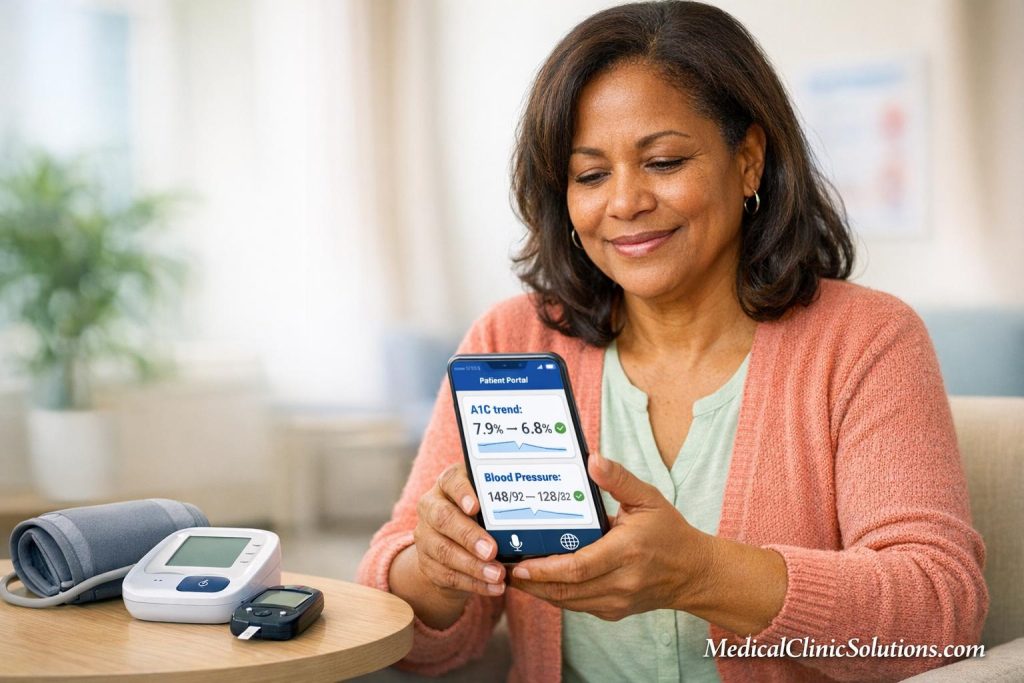
Patient portals are transforming how chronic conditions like diabetes, hypertension, and HIV are managed. These secure online tools connect patients with healthcare providers, offering features like lab result tracking, secure messaging, and medication refill requests. Research shows that frequent portal use improves health outcomes, such as better blood sugar and blood pressure control. For example, patients with higher login activity are 1.77 times more likely to achieve controlled HbA1c levels.
Key findings include:
- Increased Usage: Median portal logins doubled from 2019 to 2022.
- Better Outcomes: Consistent users see improved clinical results, such as reduced diabetes distress and better medication adherence.
- Communication Gains: Secure messaging enhances patient-clinician interactions, often replacing in-person visits.
However, barriers like low digital literacy, limited internet access, and usability issues hinder adoption. Solutions such as automated enrollment, mobile-friendly designs, and provider encouragement can help close these gaps. Clinics must act now to ensure equitable access and maximize the potential of patient portals in chronic care management.
Increase Patient Engagement with help from these 3 Digital Solutions
Research Findings: How Patient Portals Support Engagement
Patient Portal Impact on Chronic Care: Key Stats & Outcomes
Portal Use and Engagement Trends
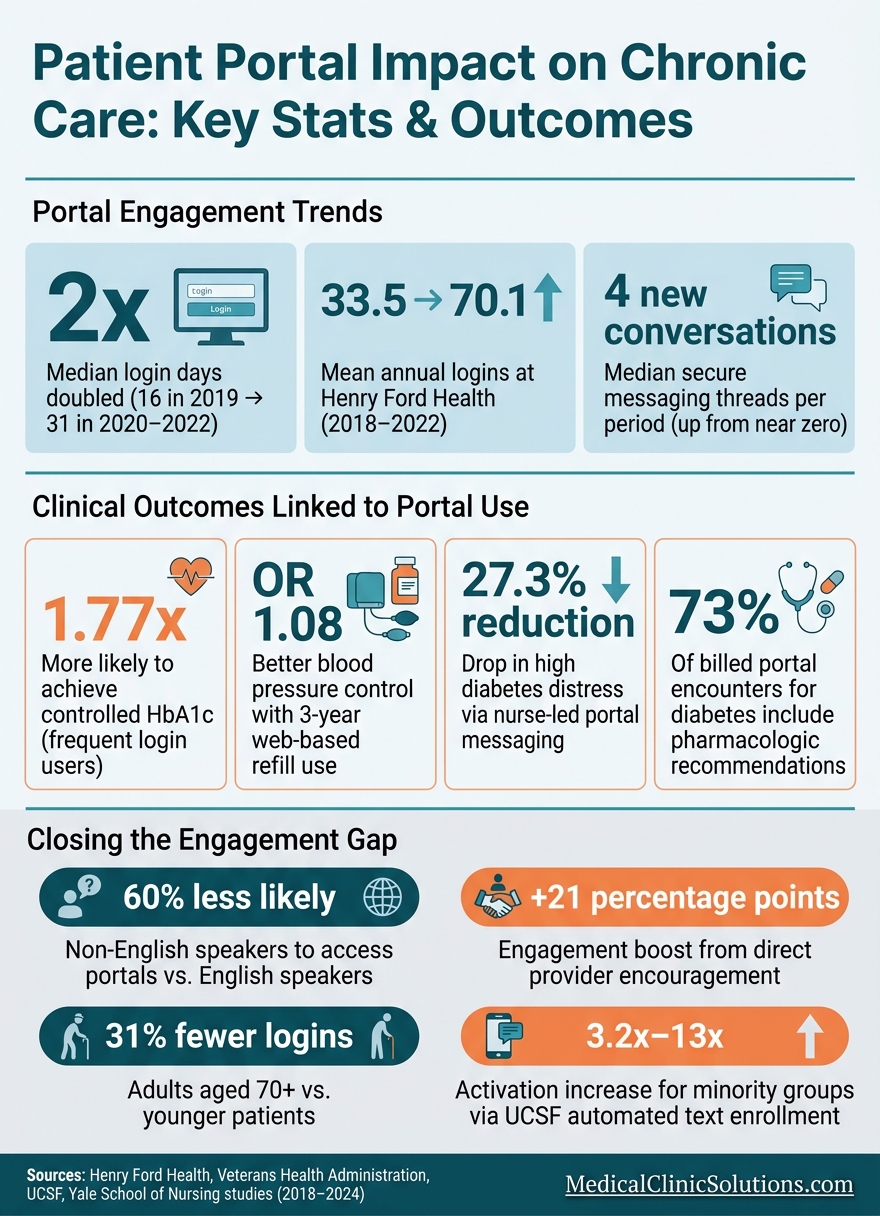
Over the past few years, patient portal usage has seen a major uptick, with the COVID-19 pandemic acting as a catalyst for this shift. For patients managing chronic conditions, the median number of login days increased from 16 in 2019 to 31 between 2020 and 2022. Other activities, like viewing test results and using secure messaging, also showed notable growth. Median test result views climbed from 4 to 7, while secure messaging, previously almost nonexistent, rose to a median of 4 new conversations per period.
A retrospective study conducted by Henry Ford Health tracked 22,465 patients dealing with hypertension and type 2 diabetes between 2018 and 2022, offering a clear picture of this trend. The study found that mean annual portal logins jumped from 33.5 in 2018 to 70.1 in 2022, more than doubling in just four years. This consistent increase points to a lasting behavioral change, not just a temporary adjustment due to the pandemic. Such heightened engagement is paving the way for tangible improvements in managing chronic diseases.
Effects on Self-Management and Health Outcomes
The surge in portal use is more than just a numbers game – it’s making a measurable difference in health outcomes. Research shows that frequent portal use is linked to better clinical results. For example, data from Henry Ford Health revealed that patients with higher login frequencies had a 1.77 times greater likelihood of achieving controlled HbA1c levels, with the most active users showing marked improvements in glycemic control.
Sustained engagement appears to be more impactful than sporadic use. A Veterans Health Administration study involving 111,686 veterans with diabetes highlighted this: veterans who used secure messaging for over three years had an odds ratio of 1.28 for achieving glycemic control, compared to 1.24 for those using it for two years. Similarly, using web-based prescription refill features for three years correlated with better blood pressure management (OR 1.08) and improved LDL cholesterol levels. The takeaway? Long-term and consistent use of portal features leads to better health outcomes.
| Outcome Measure | Portal Feature | Statistical Impact |
|---|---|---|
| Glycemic Control (HbA1c) | Secure Messaging / Frequent Logins | OR 1.24–1.77 |
| Blood Pressure Control | Web-based Refills / Frequent Logins | OR 1.07–1.08 |
| Diabetes Distress | Nurse-led Portal Messaging | 27.3% reduction in high distress |
| Medication Adherence | Secure Messaging / Refill Function | Improved adherence and titration |
Better outcomes often stem from stronger communication between patients and their healthcare providers.
How Portals Improve Patient-Clinician Communication
Patient portals are reshaping how patients and clinicians communicate. Through secure messaging, patients can share personal health details – like symptoms, side effects, or life stressors – that lab results alone can’t capture. Interestingly, 56.3% of billed portal message encounters include patients sharing this kind of information.
"Portal messages involving medical decision-making can substitute for in-person medical visits and enhance access." – Terrence Liu, MD, MS, University of Utah
This shift toward asynchronous care is significant. For example, 73% of billed portal message encounters for diabetes patients include pharmacologic recommendations, meaning many medication decisions now happen outside the traditional office visit. Portals also improve the quality of medical records: for patients with type 2 diabetes, active portal users had an average of just 111.9 days between updates to their electronic health records, compared to 136.7 days for non-users. This quicker flow of updated information enables clinicians to make better-informed decisions, enhancing chronic disease management overall.
Barriers to Portal Use and Persistent Gaps
Disparities by Age, Literacy, and Internet Access
Even as patient portal usage grows, it’s clear that not everyone benefits equally. Certain groups face significant barriers, creating gaps in engagement. For instance, patients with higher health literacy log in 1.51 times more frequently than those with lower literacy. This gap actually widened during the pandemic, even though differences by age and sex became less pronounced.
Age remains a major factor. Adults aged 70 and older log in 31% less often than younger patients. Among those aged 75 and up, only 10.6% are even offered portal access. Education and location also play key roles – having a college degree boosts adoption by 6.9 percentage points, while rural residents encounter more obstacles compared to their urban counterparts. Language is another hurdle; non-English speakers are 60% less likely to access portals than English speakers. These disparities highlight the need for solutions tailored to specific populations.
"These findings suggest that health systems and practices must understand and address persistent disparities in patient portal utilization among some populations (eg, lower health literacy) as they leverage digital health tools." – Esther Yoon, PhD, MPH, MS, Northwestern University
Usability and Trust Issues
Challenges with usability and trust also keep many patients from fully adopting portals. Complicated navigation, cumbersome registration processes, and privacy concerns often discourage users. A common issue is the "enrollment-disuse gap", where patients activate an account but never log in. Dr. Emilyn Anderi from Henry Ford Health points out:
"A significant enrollment-disuse gap was observed, with the largest proportion of users never logging in throughout the study… it underscores a critical opportunity for the health care system to enhance patient engagement."
The process often fails before it even starts. For example, requiring patients to locate and input access codes from after-visit summaries can be a major obstacle, especially for those with limited digital skills. Additionally, Black and Hispanic patients are 5.2 percentage points less likely than White patients to be offered portal access by their providers.
"Without special efforts to engage patients with portals, interventions that use patient portals to target hypertension may exacerbate disparities." – Rasha Khatib, PhD, MHS, Advocate Health
Addressing these usability and trust issues is essential for improving engagement across all demographics.
Ways to Address These Barriers
Practical strategies can make a real difference in closing these gaps. Ensuring that every patient is offered portal access is a critical first step. When providers actively encourage portal use, engagement jumps by 21 percentage points. Standardizing this offer during check-in or check-out could significantly reduce inequities.
Automated enrollment systems also show promise. For instance, UCSF introduced a text-message-based autoenrollment system in 2020. Patients received a single-click link to set up portal credentials, eliminating the need for manual codes. By the end of the year, this approach led to a 3.5-fold increase in activation rates for Latinx patients, a 3.2-fold increase for Black patients, and a 13-fold increase for non-English speakers.
Other targeted solutions include using health literacy screening tools to identify patients who might need extra assistance. Clinics can then provide these patients with in-person coaching or simplified guides. For non-English speakers, multilingual portal interfaces are crucial. Considering that Black and Hispanic users are more likely to use portals via smartphones, designing mobile-friendly platforms is another key strategy.
| Intervention | Impact on Portal Engagement |
|---|---|
| Provider/insurer offer | +24.9 percentage points in likelihood of use |
| Direct provider encouragement | +19.5 to +21 percentage points in likelihood of use |
| Automated text-based enrollment (UCSF) | 3.2x–13x increase in activation for minority groups |
| Mobile-optimized design | Higher engagement for Black and Hispanic users |
Portal Features That Support Chronic Care Management
High-Impact Portal Functions
Some portal features stand out when it comes to improving chronic care management. Lab result tracking ranks as the most frequently used feature. In one primary care study, patients accessed their health records an average of 10.8 times per patient over six months. This frequent access allows patients to monitor trends in their health data, helping them ask better questions during appointments and stay more informed about their progress.
Another standout feature is secure messaging, which consistently leads to better outcomes for chronic conditions. Additionally, online refill requests have been linked to improved blood pressure control. These tools are most effective when integrated into broader care strategies.
"Increased patient portal usage is associated with greater likelihood of T2DM and hypertension control." – Emilyn Anderi, MD, MSc, Henry Ford Health
Connecting Portals to Chronic Care Models
To maximize their impact, portals need to work hand-in-hand with chronic care models. This integration enables real-time data sharing and supports Remote Patient Monitoring (RPM) and Chronic Care Management (CCM). These models rely on continuous data collection and adjustments, which portals can facilitate.
For example, a portal can allow patients to share home blood pressure or glucose readings with their care team, fitting seamlessly into RPM workflows. However, adoption is still low – only 8.7% of patients with home blood pressure monitoring orders currently share their readings through portals. Bridging this gap requires clear instructions for patients and a team-based approach. As Dr. Terrence Liu from the University of Michigan explains:
"High-value use of portal messaging requires engagement from the entire healthcare team, not only the lead clinician."
To avoid overwhelming clinicians with message volume, clinics can delegate tasks strategically. For instance, scheduling requests can go to medical assistants, while pharmacists can handle medication-related inquiries.
The Role of Patient Education Content
Educational content written in plain language plays a key role in keeping patients engaged. When portals link diagnoses and lab results to a health library, patients can immediately understand what their numbers mean, which promotes self-confidence and active participation in their care.
A great example of this approach is the MAP (Multilevel intervention to improve Access to Portals) pilot, conducted from May 2023 to July 2024 by Yale School of Nursing and UConn Health. The program provided 22 adults with type 2 diabetes – all new to portals – with tablets, internet access, and nurse-led portal training. The results were impressive:
- 100% portal activation
- 76% of participants remained active users after six months
- Diabetes-related distress dropped from 50% to 22.7%
- 32% of participants reported a clearer understanding of their condition
For clinics, educational materials work best when they are tailored, easy to read, and offered at the right time. With around 13.6% of patients struggling to understand standard clinical language, simplifying content is essential. Customizing resources within the portal empowers patients, boosting their engagement and improving chronic care outcomes.
What This Means for U.S. Clinics and Next Steps
The research highlighted in this article reveals practical ways U.S. clinics can improve chronic care engagement through patient portals. It also sheds light on areas where further progress is needed.
Steps Clinics Can Take Now
Clinics can take immediate steps by focusing on a few impactful strategies. One key approach is setting clear expectations for portal use during a patient’s first visit. Additionally, delegating portal messages to the right team members can ease the workload on primary care physicians. For example, Atrius Health implemented this practice and saw a noticeable reduction in physician inbox burden. Similarly, Michigan Medicine revamped its portal interface in January 2024 to guide patients on effective communication, which helped minimize lengthy and unfocused messages.
For clinics already using EMR/EHR systems, integrating portal activity into existing workflows is crucial. Sharing monthly summaries of portal engagement with Primary Care Providers (PCPs) can help care teams identify patients who may be disengaged before their care gaps widen. Platforms like those listed on Medical Clinic Solutions can assist clinics in streamlining these processes.
Beyond operational adjustments, clinics must also address disparities in access to ensure all patients benefit equally from patient portals.
Reducing Disparities in Portal Access
One of the most striking findings across studies is the role of the "offer gap" in driving disparities. Non-Hispanic Black and Hispanic patients are significantly less likely to be offered portal access compared to White patients, which accounts for much of the usage gap.
"Interventions targeted at equality in offering access to patient portals and encouraging patients to use them could advance equitable and widespread access." – Ishana Maini, MPH, Midwestern University
To address this, clinics should prioritize direct provider encouragement, a simple and cost-effective solution. Studies show that this approach can boost portal usage by 19.5–21 percentage points. For patients with limited digital skills, clinics can deploy Digital Navigators – individuals trained to provide one-on-one support for portal setup. A program launched by the University of Rochester in May 2024 used AmeriCorps volunteers and undergraduate students to help patients register via telephone, successfully expanding portal access for previously unregistered individuals.
Additionally, ensuring portals are fully functional on smartphones is critical, as Hispanic and Black patients are more likely to rely on mobile-only internet access.
These steps can significantly improve engagement, but there are still gaps that require further investigation.
Gaps That Need Further Research
While operational improvements can make a difference now, long-term research is needed to address unresolved issues. Three major gaps stand out:
- The enrollment-disuse gap remains a challenge. In a study of 250,345 adults with chronic conditions, 61% activated a portal account, but only 54% ever logged in. The reasons behind this gap – whether it’s due to low confidence, distrust, or lack of awareness – are still unclear.
- Most studies focus on short-term outcomes, leaving the long-term effects of sustained portal use on clinical markers like A1c, LDL, and blood pressure largely unexamined.
- The impact of "digital redlining" – where broadband infrastructure is limited in rural and low-income areas – on chronic care outcomes through patient portals is another area that demands closer study.
Addressing these research gaps will be essential for shaping the future of patient portal use in chronic care management.
FAQs
Which portal features actually improve chronic disease outcomes?
Research indicates that patient portal features, such as secure messaging, play a key role in managing chronic diseases. For example, they can lead to better outcomes like improved glycemic control (HbA1c) in diabetes. Other helpful tools include online prescription refills, which have been linked to better blood pressure management, and access to lab results and care notes. These tools empower patients to prepare for appointments, request support, and share important data – like home blood pressure readings – making it easier to manage ongoing care effectively.
How can clinics reduce portal access gaps for older, low-literacy, and non-English patients?
Clinics can help close access gaps by offering universal portal registration to every patient. For older adults, patients with limited literacy, or non-English speakers, clinics should provide hands-on training, technical help, and personalized support to make the portal more accessible. Including portal information in routine communications, such as appointment reminders, can also boost awareness and usage. Moreover, using portal data during phone calls or in-person visits ensures patients who face digital challenges still receive well-rounded care.
What can providers do to prevent patients from activating a portal but never using it?
Providers looking to boost patient portal usage should focus on eliminating obstacles such as overly complicated designs and irregular follow-ups. Some effective approaches include:
- Simplifying interfaces to make portals easier to navigate.
- Responding quickly to patient inquiries to build trust and reliability.
- Customizing outreach efforts to enhance digital literacy, particularly for older adults and underserved communities.
Additionally, weaving portal usage into everyday care workflows helps ensure these tools align with patient needs, encouraging consistent and meaningful engagement.